What Angus Castus actually does to pituitary signalling — and why it takes 90 days.
Vitex agnus-castus — chasteberry — is one of the few herbal medicines with a clear, well-characterised mechanism of action and a body of randomised controlled trial evidence that would satisfy most integrative doctors. It doesn't contain phytoestrogens. It doesn't directly supply hormones. It works on the pituitary gland, and the effect takes about 90 days to become clinically meaningful.
The mechanism
Vitex acts on dopamine D2 receptors in the anterior pituitary gland. By stimulating these receptors, it inhibits prolactin secretion. Elevated prolactin is implicated in a range of menstrual irregularities — luteal phase defects (short second half of the cycle), irregular cycles, PMS-related breast tenderness, and certain types of infertility.
By lowering prolactin, Vitex allows the hypothalamic-pituitary-ovarian axis to self-correct. It's not forcing a hormonal outcome; it's removing a brake that was preventing the system from functioning normally. That's why it takes 2-3 full menstrual cycles to show effect — the body needs time to recalibrate.
What the trials show
The most-cited trial (Schellenberg, 2001, BMJ) randomised 170 women with PMS to Vitex or placebo for three cycles. The Vitex group showed statistically significant improvement in irritability, mood alteration, anger, headache, breast fullness, and bloating. Other trials show improvement in cycle regularity and luteal phase length.
For mild fertility issues related to luteal phase deficiency and hyperprolactinaemia, Vitex has a credible evidence base — several studies show improved conception rates over 3-6 months of use. It's not IVF; it's not even clomiphene. For the subset of women whose fertility challenge is linked to hormonal imbalance and prolactin modulation, Vitex may offer meaningful support — always alongside a doctor tracking the underlying cause.
Who should and shouldn't take it
Good candidates: Women with PMS (especially breast tenderness), irregular cycles, short luteal phase, mild hyperprolactinaemia, or the perimenopausal transition where cycles are becoming erratic.
Not appropriate for: Women on hormonal contraception (Vitex may interfere with efficacy). Women on dopamine-active medications (bromocriptine, cabergoline, certain antipsychotics). Women with hormone-sensitive conditions where prolactin modulation is undesirable. Pregnancy — discontinue if you conceive.
How Vivid formulates it
Vivid's Angus Castus delivers 400 mg of Chaste Tree Berry Extract per vegetable capsule. The standard dose is 1-3 capsules daily, taken in the morning (Vitex's dopaminergic effect aligns better with the morning cortisol-prolactin rhythm). Commit to at least 3 full menstrual cycles before assessing effect. The most common mistake is quitting at 6 weeks because "nothing happened yet."
Pairing with other Vivid products
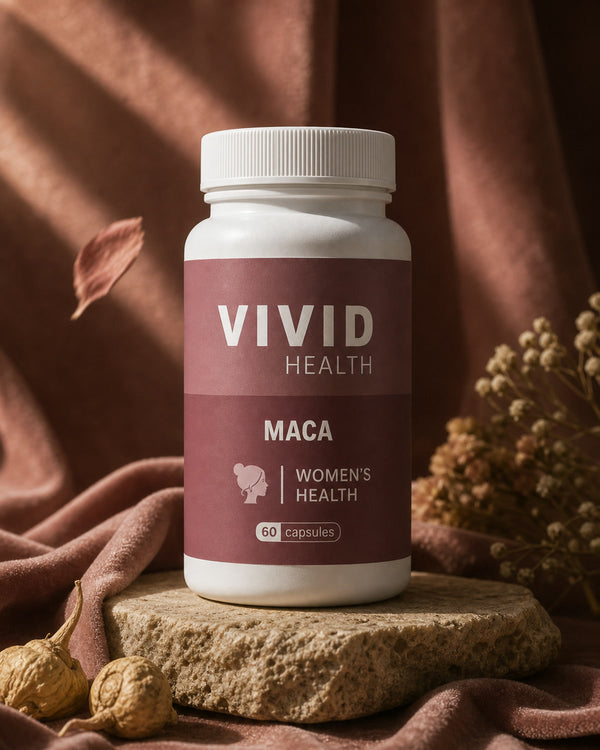
For comprehensive women's health support, Vitex pairs well with Maca (adaptogenic endocrine support without directly modulating prolactin) and Sage (for menopausal hot flush and night sweat relief via a different mechanism — Sage works on thermoregulatory centres, not the pituitary). The three together cover hormonal balance, energy, and menopausal symptom management from three distinct pharmacological angles.