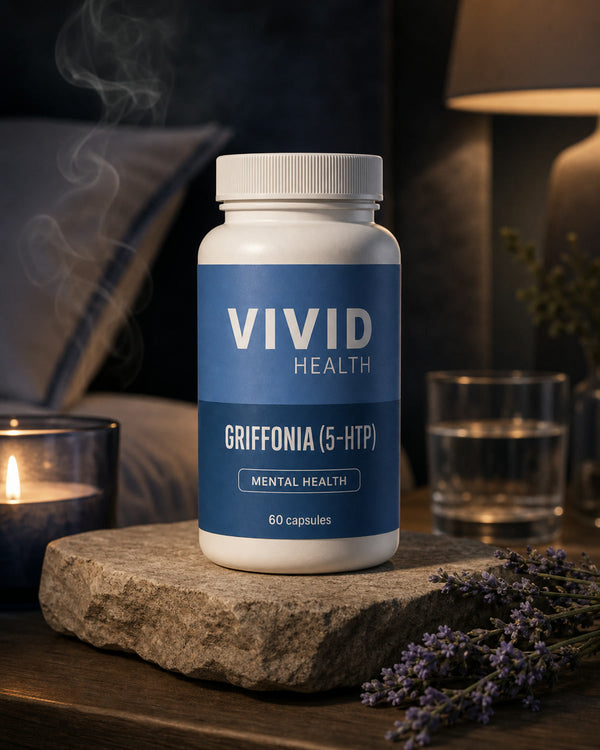
Where Griffonia helps — and where it doesn't. A careful look at the serotonin precursor.
Serotonin is the neurotransmitter most associated with mood, sleep, and appetite regulation. Low serotonin activity is implicated in depression, anxiety, insomnia, and certain pain conditions. SSRIs — the most prescribed class of antidepressants — work by preventing serotonin from being reabsorbed after it's released, effectively increasing the amount available in the synaptic gap.
5-HTP takes a different approach. Instead of slowing serotonin's removal, it increases serotonin's production. 5-HTP (5-hydroxytryptophan) is the direct metabolic precursor to serotonin — the step between the dietary amino acid tryptophan and the neurotransmitter itself. By supplementing the precursor, you give the brain more raw material to work with.
Where does it come from?
Vivid sources 5-HTP from Griffonia simplicifolia — a West African climbing shrub whose seeds are unusually rich in 5-HTP. This isn't a synthetic compound; it's an extract from a plant that naturally concentrates the molecule. Each Vivid capsule delivers 100 mg of Griffonia-derived 5-HTP.
What the evidence shows
The clinical picture for 5-HTP is genuinely interesting but uneven.
Sleep: This is where 5-HTP is strongest. Multiple trials show it improves sleep onset — the time it takes to fall asleep — particularly in people whose insomnia is driven by racing thoughts and mental restlessness rather than physical discomfort. The effect is often noticeable on the first or second night. Serotonin is also a precursor to melatonin, so increasing serotonin availability indirectly supports the body's own melatonin production.
Mood: Several small controlled trials suggest 5-HTP may support mood in mild, subclinical low mood, though the evidence base is thin and mixed. It is not comparable to prescription antidepressants and must never be positioned as a replacement for them — depression of any severity warrants proper diagnosis and care from a doctor. It occupies a genuine space for subclinical low mood, seasonal affect, and the "I'm not depressed but I'm not great" grey zone that many people live in.
Appetite: There's modest evidence that 5-HTP reduces carbohydrate cravings and promotes satiety, likely via serotonin's role in appetite regulation. The effect is gentle — don't expect appetite-suppressant-level results.
The critical safety point
5-HTP must not be combined with SSRIs, SNRIs, MAOIs, tramadol, or any other serotonergic medication. The combination can cause serotonin syndrome — a potentially dangerous condition of serotonin excess characterised by agitation, tremor, hyperthermia, and in severe cases, seizures. This isn't a theoretical risk; it's a well-documented drug interaction.
If you take any antidepressant, anti-anxiety medication, or migraine triptan, discuss 5-HTP with your prescribing doctor before starting. This is non-negotiable.
When to take it
Follow your product's label — evening use is typical where sleep is the goal. Start at the lower end — some people are more serotonin-sensitive than others and may experience vivid dreams, mild nausea, or drowsiness at higher initial doses.
5-HTP vs GABA vs Tranquil — which one?
These three Vivid products overlap in the sleep and calm space but target different mechanisms. 5-HTP works on serotonin (mood, racing mind). GABA works on the inhibitory nervous system (body tension, overstimulation). Tranquil combines hops, valerian, passionflower, and skullcap — traditional sedative botanicals that work through multiple pathways at once. The Rest & Focus Stack bundles all three because many people's sleep issues involve more than one mechanism.
Pairs well with